 The Erasmus+ project Digital Photography for Digital Competences and European Cultural Heritage focused on the development of innovative Digital Photography for Digital Competences approaches in adult education. The project aimed to strengthen digital competences among adults by using digital photography as a motivating and creative learning instrument. Combining technology-enhanced learning, active participation, and cultural engagement, the initiative supported adult learners in developing practical digital skills while contributing to the documentation and preservation of European cultural heritage.
The project addressed the increasing need for digital competences identified within the European Digital Competence Framework (DigComp 2.0). Instead of teaching digital skills in an isolated and purely technical way, the project introduced digital photography as a motivating entry point into digital learning processes. Participants learned to create, process, manage, store, and share digital images while simultaneously developing competences in file administration, multimedia use, social media participation, and responsible digital communication.
Particular attention was given to adult learners, especially elderly adults, while also addressing younger adults and disadvantaged groups. The pedagogical approach followed active and heutagogical learning principles, encouraging self-directed learning, peer feedback, self-evaluation, and social participation. Through photography-related activities, learners were encouraged to remain socially and intellectually active while strengthening their inclusion and participation in society.
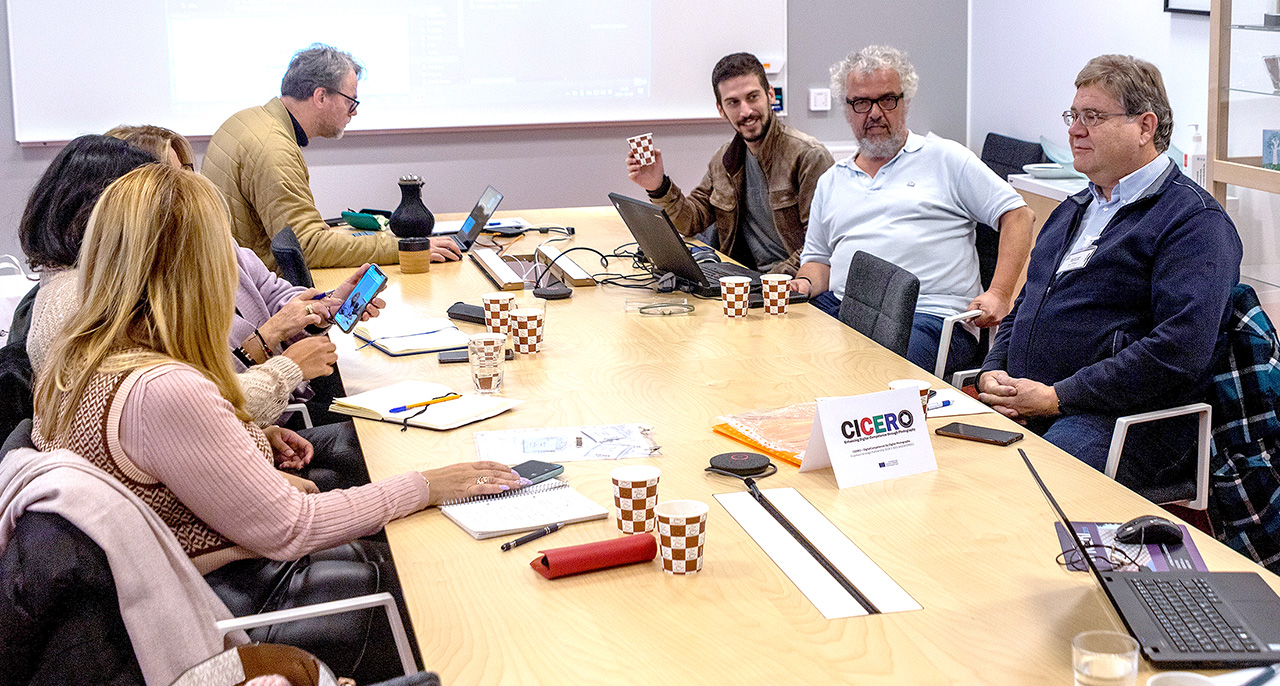
Final Meeting of the CICERO Project at the University of Stockholm (Institute of Informatics).
The project also aimed to contribute to the European Year of Cultural Heritage 2018 by establishing a freely accessible database of Creative Commons-licensed photographs documenting local and European cultural heritage. Additional activities included the development of a blended learning course, an international photography competition, and a transferability and evaluation guide supporting the implementation of the methodology in other educational sectors, particularly school education.
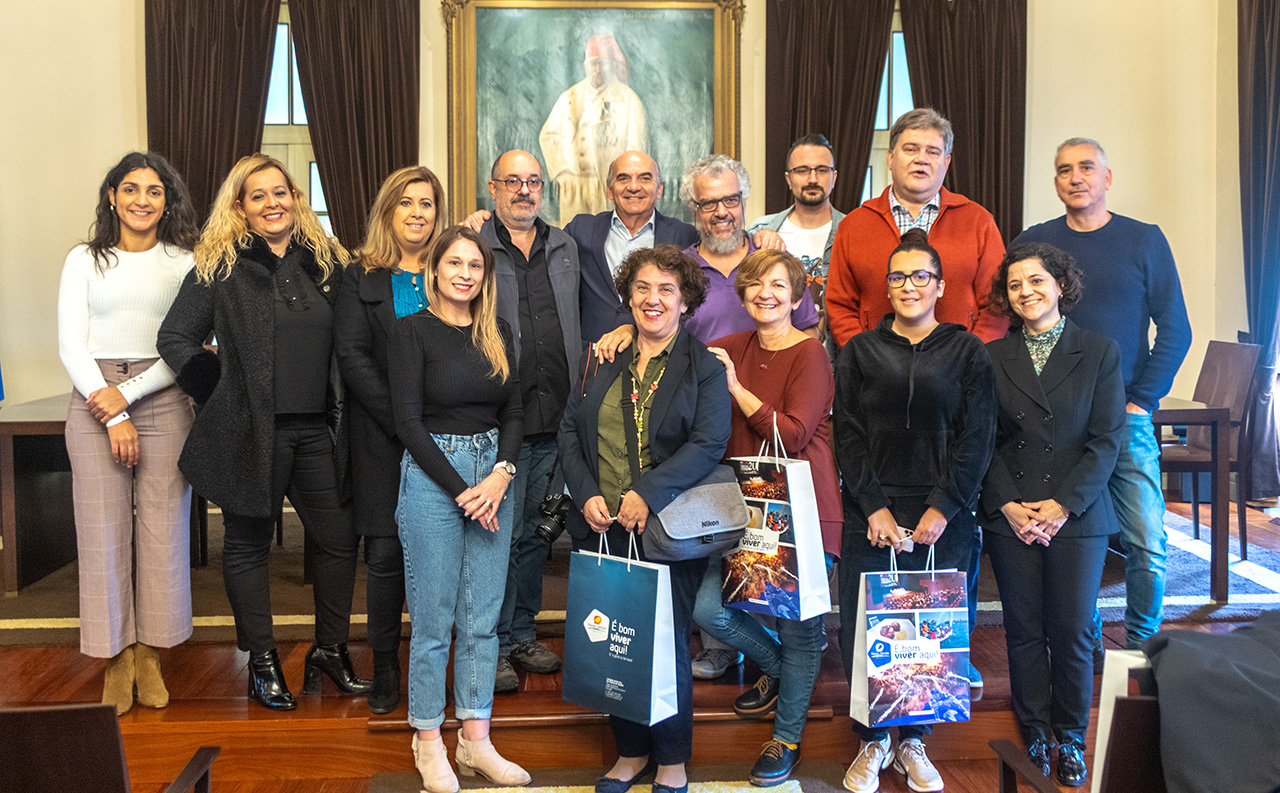
Reception hosted by the mayor of Povoa de Varzim, the home town of ProAndi
The project was implemented as a transnational cooperation initiative bringing together European perspectives on culture, digital education, and active citizenship. Peter Mazohl prepared the original Erasmus+ project application, while the University of Stockholm assumed the official coordinating role within the consortium. His contribution focused on the pedagogical concept, the integration of digital competence frameworks, and the development of innovative approaches connecting creativity, multimedia technologies, and adult learning.
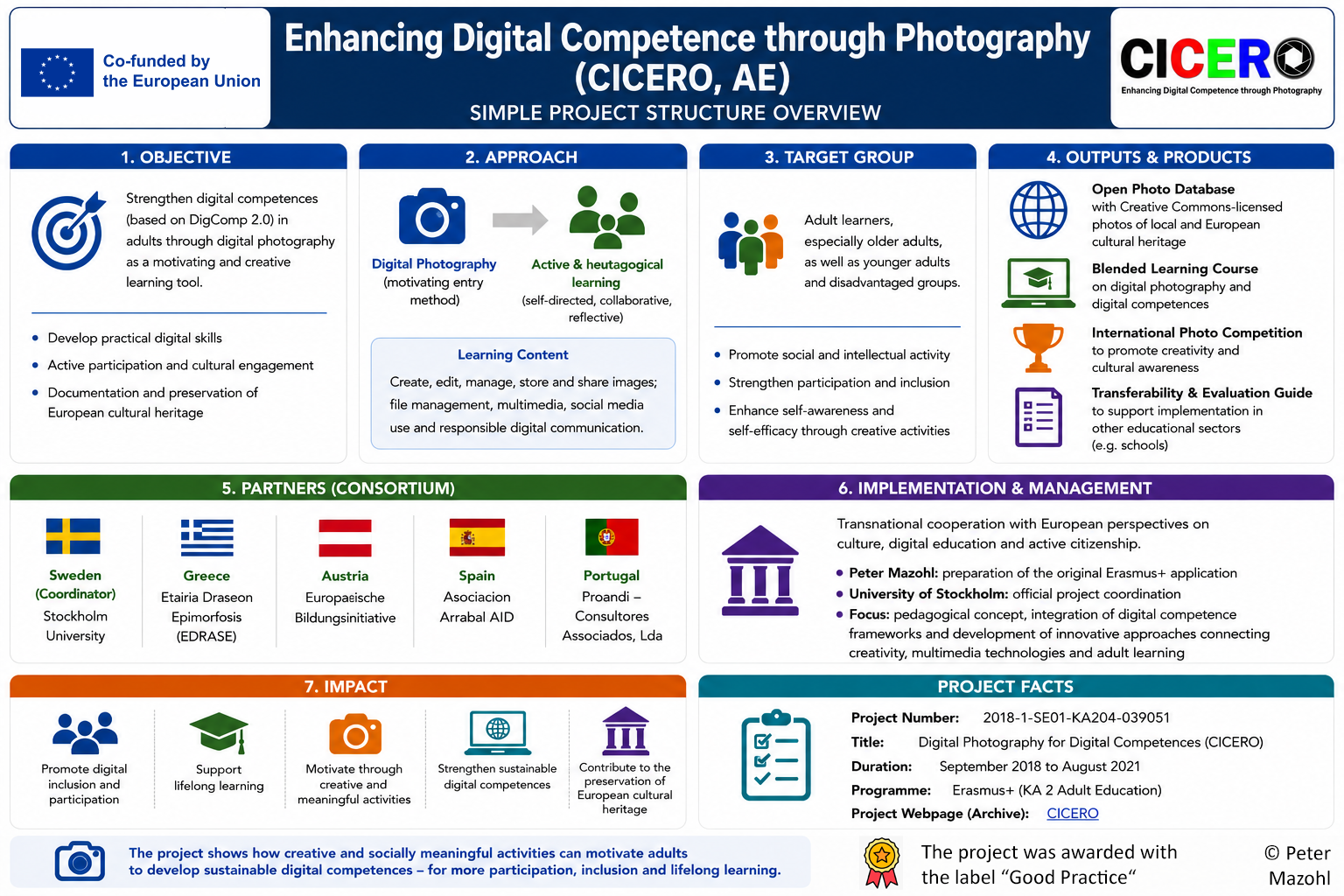
The project contributed significantly to the promotion of digital inclusion, lifelong learning, and technology-enhanced education by demonstrating how creative and socially meaningful activities can motivate adults to develop sustainable digital competences.
Project Overview
- Project Number: 2018-1-SE01-KA204-039051
- Title: Digital Photography for Digital Competences (CICERO)
- Duration: September 2018 bis August 2021
- Programme: Erasmus+ (KA 2 Adult Education)
- Project Webpage (Archiv): CICERO
Project partner (Consortium)
- Sweden (Coordinator): Stockholms Universitet
- Greece: Etairia Draseon Epimorfosis (EDRASE)
- Austria: Europäische Bildungsinitiative
- Spain: Asociacion Arrabal AID
- Portugal: Proandi – Consultores Associados, Lda
 The European Commission support for the production of this publication does not constitute an endorsement of the contents which reflects the views only of the authors, and the Commission cannot be held responsible for any use which may be made of the information contained therein.