 The Erasmus+ project Technology Enhanced Science Teaching (TEST) focused on the development of innovative Technology Enhanced Science Teaching approaches using multimedia-based and interactive learning materials for physics, biology, and chemistry education. The project aimed to improve science learning outcomes, particularly for female learners, by applying the innovative “Analogous Compare and Transfer” (ACAT) method, a pedagogical approach specifically designed by Peter Mazohl to support different learning behaviours in STEM education. The project combined technology-enhanced learning, multimedia methodologies, and active learner participation to facilitate the understanding of complex scientific concepts.
The project was based on a scientific research paper (Teaching science subjects to girls – The Analogous Comparison and Transfer method – ACAT) presented by Peter Mazohl at the International Conference on Education, Research and Innovation (ICERI) in Seville in 2017. The study analysed gender-related differences in STEM learning behaviour and demonstrated that multimedia-supported and image-based teaching approaches significantly improved the understanding of complex scientific contexts, particularly among female students. The ACAT methodology developed from this research introduced an innovative way of connecting everyday visual experiences with abstract scientific thinking processes.
The consortium included Colegio Internacional Costa Adeje (Spain) as applicant organisation, Dragonskolan Umeå (Sweden), Dublin Dun Laoghaire Education and Training Board (Ireland), and the European Initiative for Education (Austria). The partner institutions combined expertise in science education, multimedia learning, virtual laboratories, educational research, and teacher training. Their cooperation enabled a transnational evaluation of innovative teaching approaches across different European educational systems.
Peter Mazohl prepared the original Erasmus+ application on behalf of Colegio Internacional Costa Adeje and was largely responsible for the overall project leadership and pedagogical coordination. His contribution focused on the methodological framework of the project, the development and implementation of the ACAT approach, and the integration of multimedia-supported teaching concepts into science education.
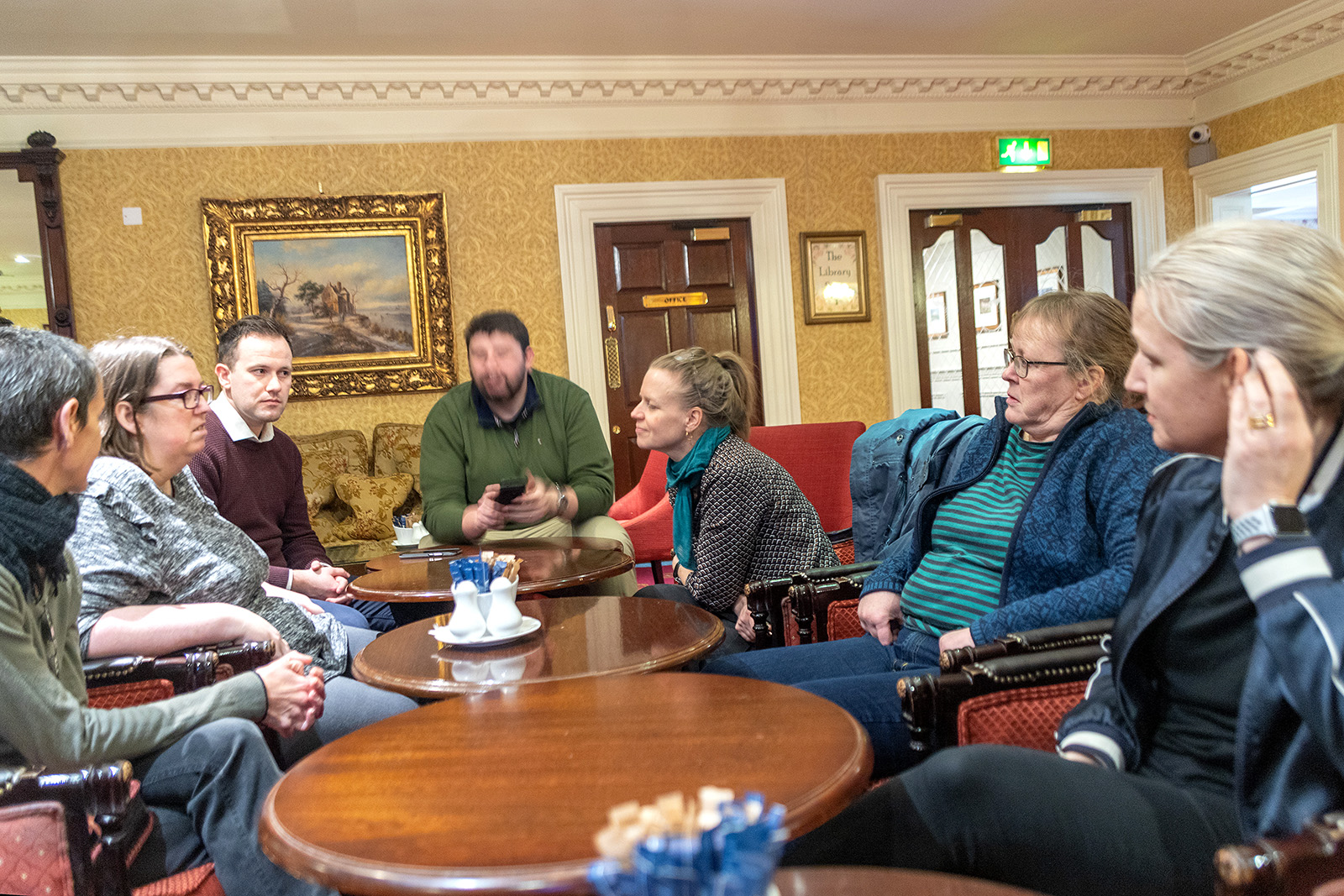
Coordinating Meeting in Dublin: Nuria Marrero, Priscilla McKenna, Aidan Lynch, Anna Lodén, Lena Lundmark, Hanna Uvel
During the project, approximately fifteen multimedia-based and interactive learning tools were developed, implemented, and evaluated in schools across Europe. These tools focused on complex scientific topics such as quantum physics, virtual dissections in biology, and the understanding of chirality in chemistry through virtual reality technologies. The learning materials were designed as Open Educational Resources (OERs) and supported active, self-directed, and technology-enhanced learning processes.
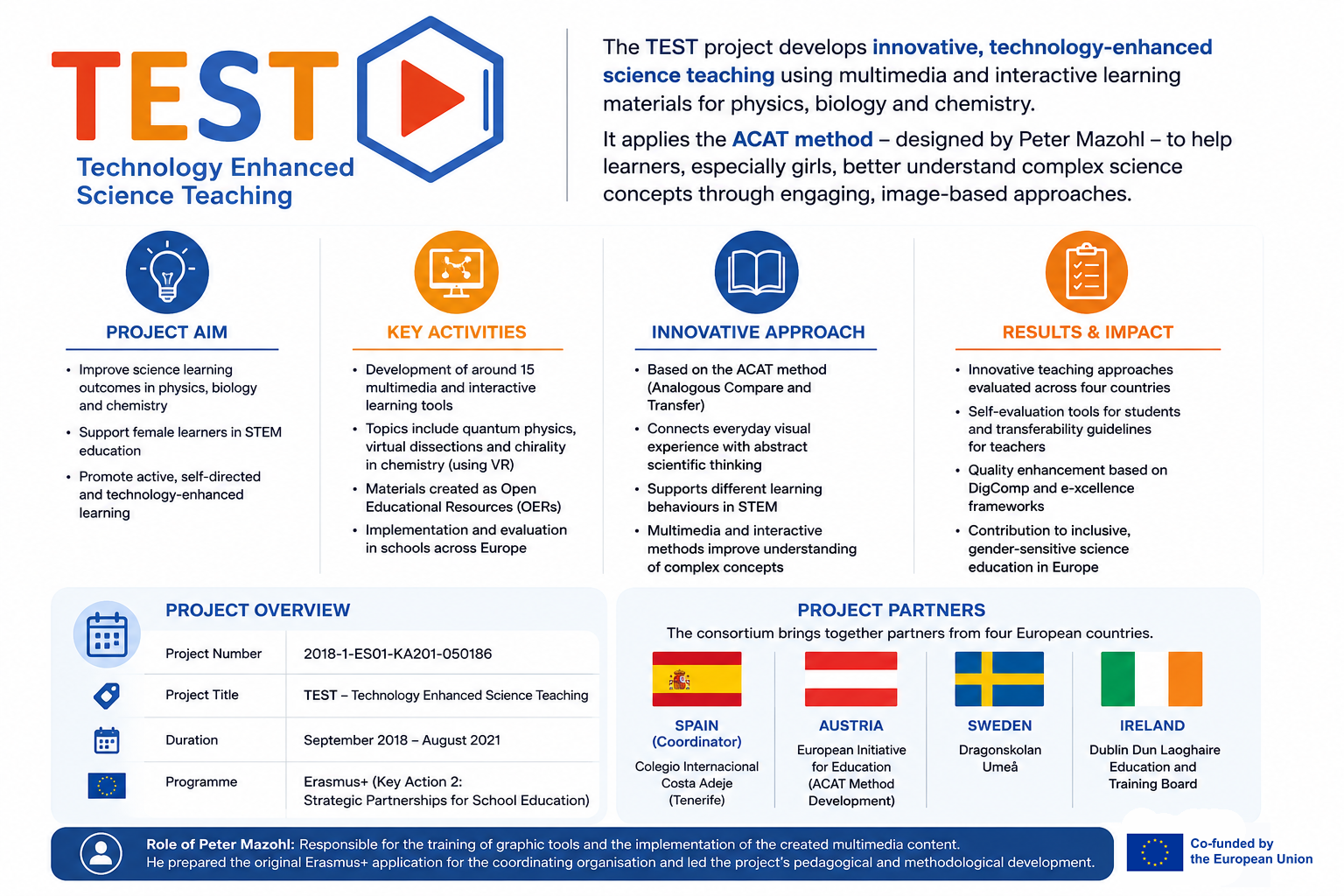
This infographic provides an overview of the Erasmus+ project TEST – Technology Enhanced Science Teaching, highlighting its innovative multimedia-based STEM teaching approaches, the ACAT methodology developed by Peter Mazohl, and the project’s contribution to inclusive and technology-enhanced science education in Europe.
The project also developed self-evaluation methodologies for students, transferability guidelines for teachers, and quality enhancement procedures based on European digital competence frameworks such as DigComp and e-xcellence. By combining innovative pedagogy, multimedia technologies, and inclusive STEM approaches, the project contributed significantly to modern science education and to the promotion of gender-sensitive teaching methodologies in Europe.
Project Overview
- Project number: 2018-1-ES01-KA201-050186
- Project title: TEST – Technology Enhanced Science Teaching
- Period: September 2018 to August 2021
- Programme: Erasmus+ (Key Action 2: Strategic Partnerships for School Education)
- Archive-Webpage: Test-Project
Project Partners
The consortium consisted of partners from four European countries:
- Spain (Coordinator): Colegio Internacional Costa Adeje (Tenerife).
- Austria: European Initiative for Education (EBI/EIE)
- Sweden: Dragonskolan Umeå.
- Ireland: Dublin Dún Laoghaire Education and Training Board
 The European Commission support for the production of this publication does not constitute an endorsement of the contents which reflects the views only of the authors, and the Commission cannot be held responsible for any use which may be made of the information contained therein.